

A medicine stockout looks like a clinical failure. It often began in the payment cycle, months earlier.
A hospital can have a legitimate clinical need. A distributor can have the product in its warehouse. A manufacturer can have it available for export. The patient can still go without it. The missing link is the invoice.
This is not an argument against hospitals, the National Health Insurance Authority or the Ministry of Health. It is an argument that a healthcare supply chain is a financial system as much as a logistics one, and that when the cash cycle breaks, the physical chain follows.

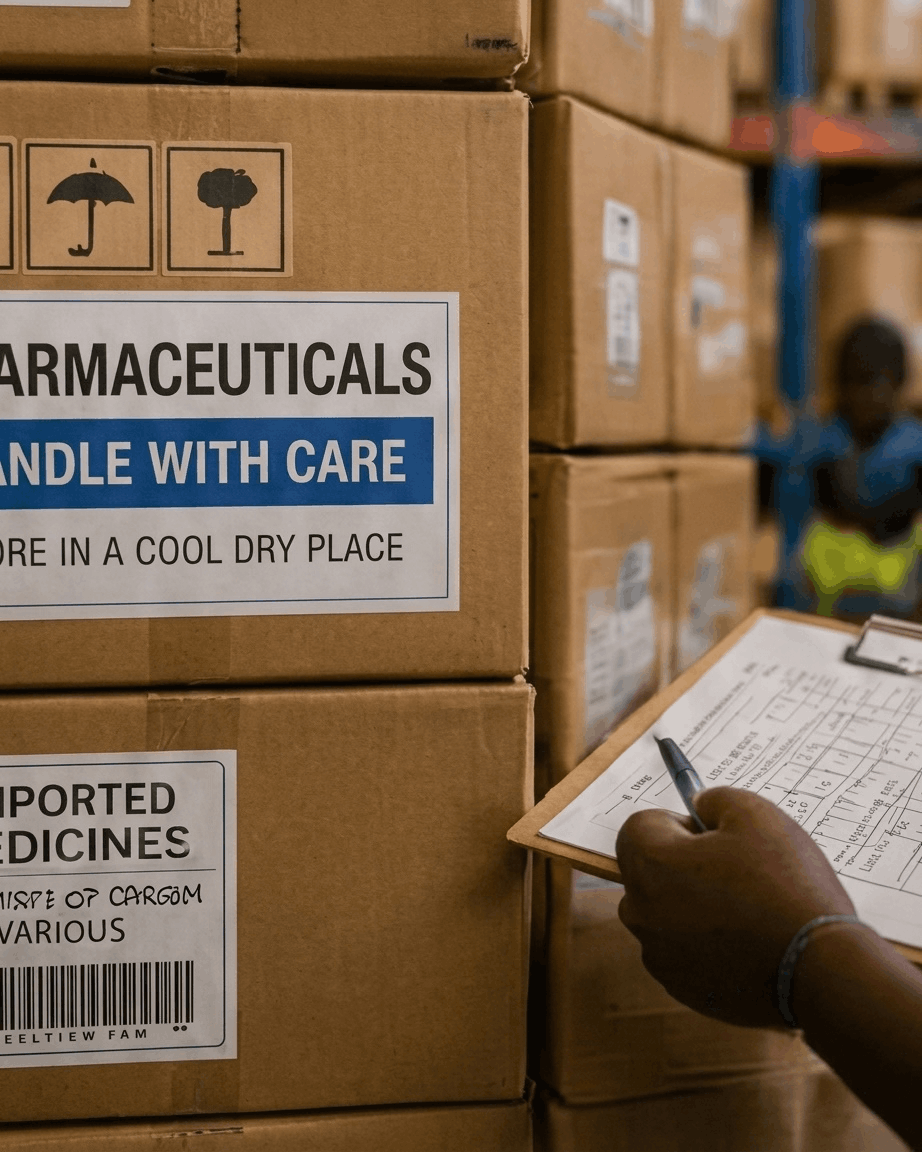
Roughly 70% of Ghana’s medicines are imported, and the country manufactures no human vaccines, so every childhood dose, routine immunization antigen and outbreak countermeasure is procured internationally. That is set out in the UNDP and WHO brief on the Vax and Pharm Ghana initiative.
That single fact sets the terms of the problem.
Importation requires foreign currency, freight, duty and port charges, settled on the international supplier’s cycle, before the product reaches a Ghanaian warehouse and long before any domestic invoice is paid. The distributor finances the gap between a hard currency payment made on fixed terms and a cedi receipt collected
whenever the payer is able.

The Alliance for Reproductive Health Rights reported outstanding health sector arrears of Ghana’s 10.35 billion in its 2025 budget analysis, with NHS-related debt estimated at GHG4.5 billion. The same analysis noted that. GHG1.7 billion of the GHG8.1 billion allocated to the NHA in 2025 has been disbursed. This figure describes a particular fiscal period rather than today's position. They establish the order of magnitude at which payment delays operate in this system.
The consequence surfaced in April 2025, when the Private Health Facilities Association of Ghana raised delayed NHIS reimbursement publicly. Within days the NHIA reported GH₵834 million paid to providers, including GH₵555 million cleared in a single week.
By March 2026 the Health Minister told Parliament that GH₵2.69 billion had gone to NHIS providers during 2025, and that claims processing and payment had accelerated. enough for payment to be made faster than the three-month window referred to in his statement.
That improvement is real and deserves acknowledgement. It also clarifies the objective. The goal is not to celebrate each clearance of arrears. The goal is a payment architecture in which arrears of that scale stop accumulating in the first place.

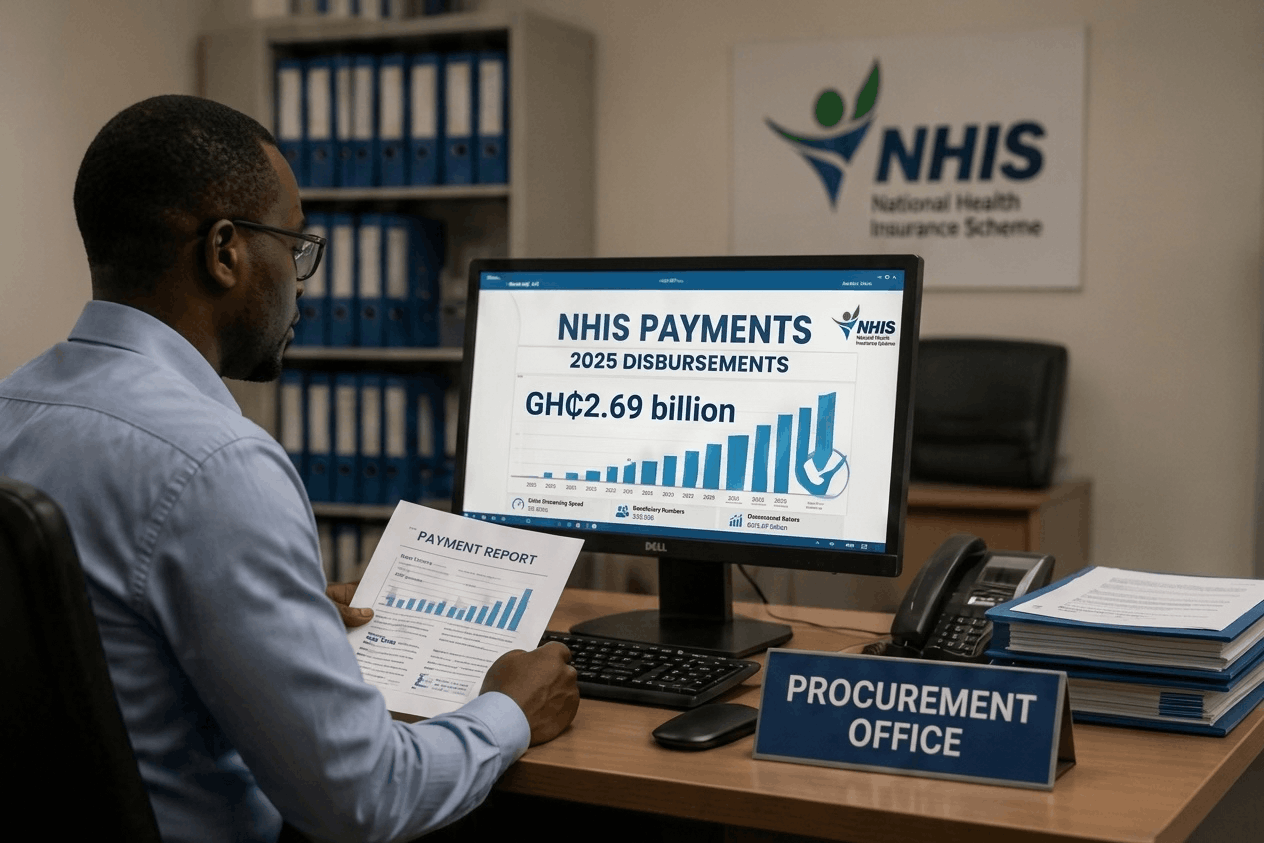
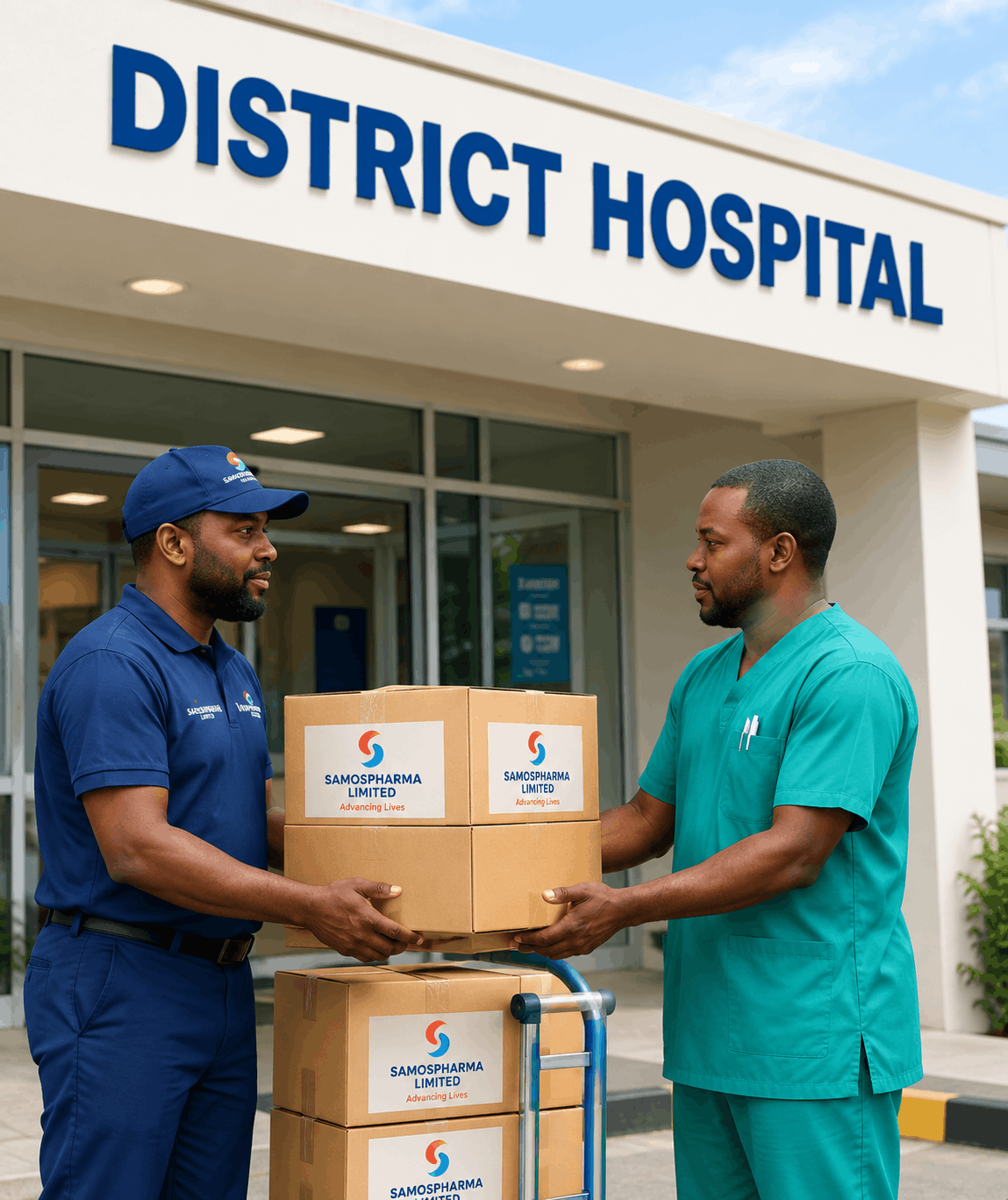
Consider the sequence after a hospital places an order. The international supplier expects payment on its agreed cycle. The distributor pays, imports, clears and stores. The distributor then supplies the hospital. The hospital may not be paid by its own payer for months. The distributor still owes its suppliers, staff, banks, transporters and regulators.
Working capital that should finance the next procurement cycle is now trapped in an outstanding invoice. The business has three options. Borrow, slow procurement, or ration credit. None of the three is good for medicine availability.


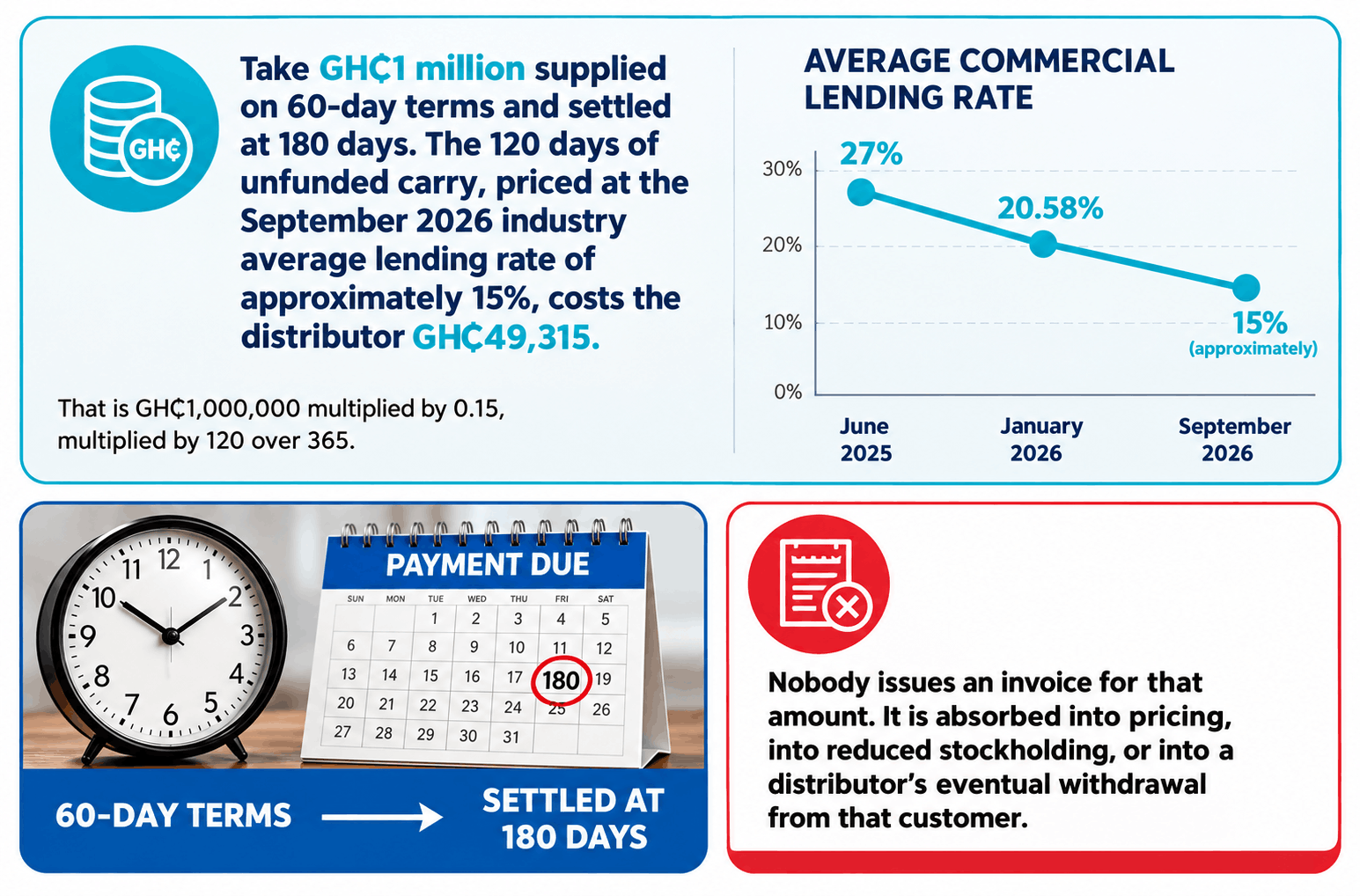
Bank of Ghana data show the average commercial lending rate at 27% in June 2025, 20.58 in January 2026 and approximately 15% by September 2026.
The Ghana Reference Rate was 10.18% effective 2nd September 2026, and the policy rate has been held at 14% since March 2026.
The easing is genuine and it changes the conversation. At 27% an unfunded receivable was a solvency question and a court was in a position to negotiate anything. At 15% it is a cost line, and cost lines can be measured, allocated and charged to whoever creates them.

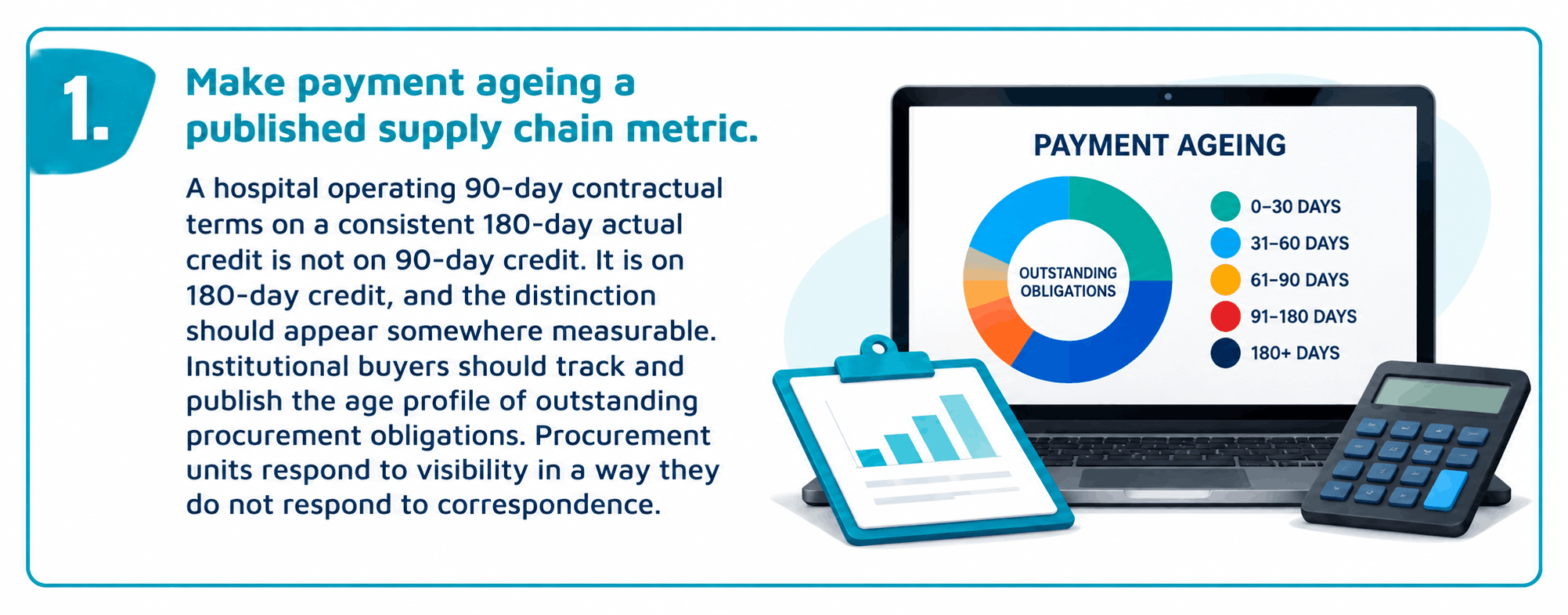
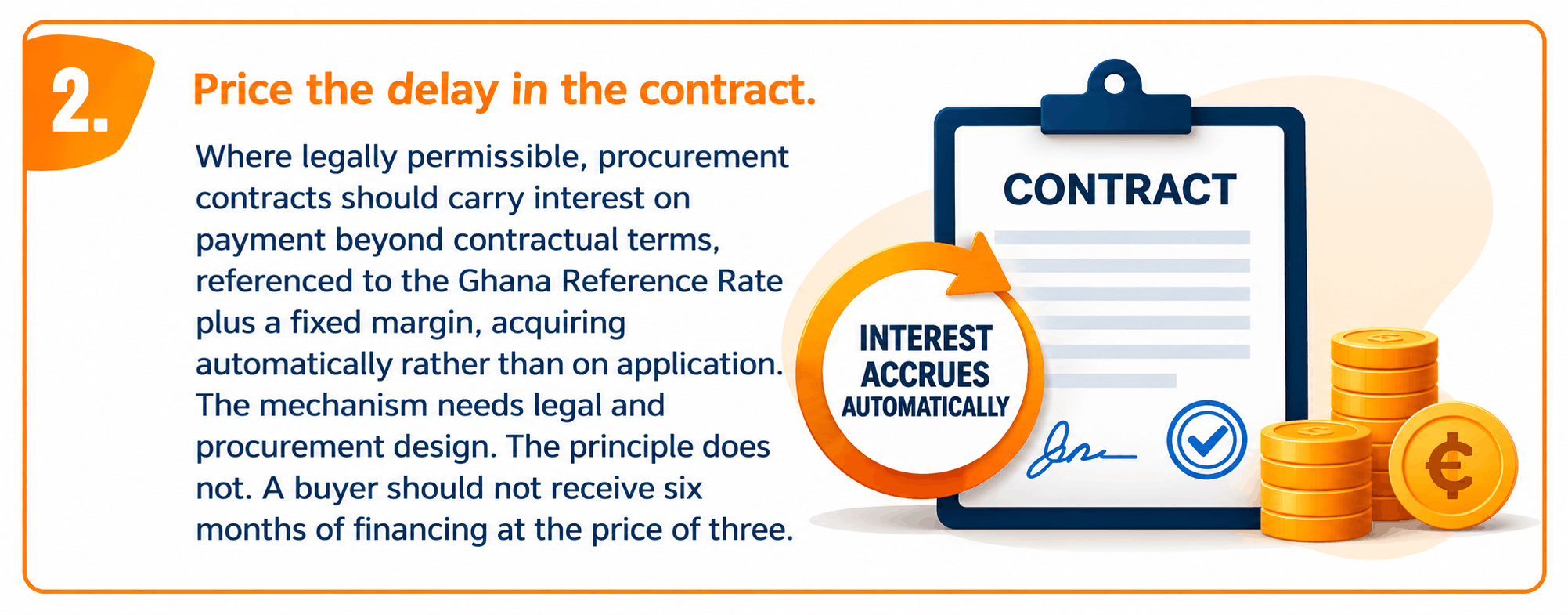
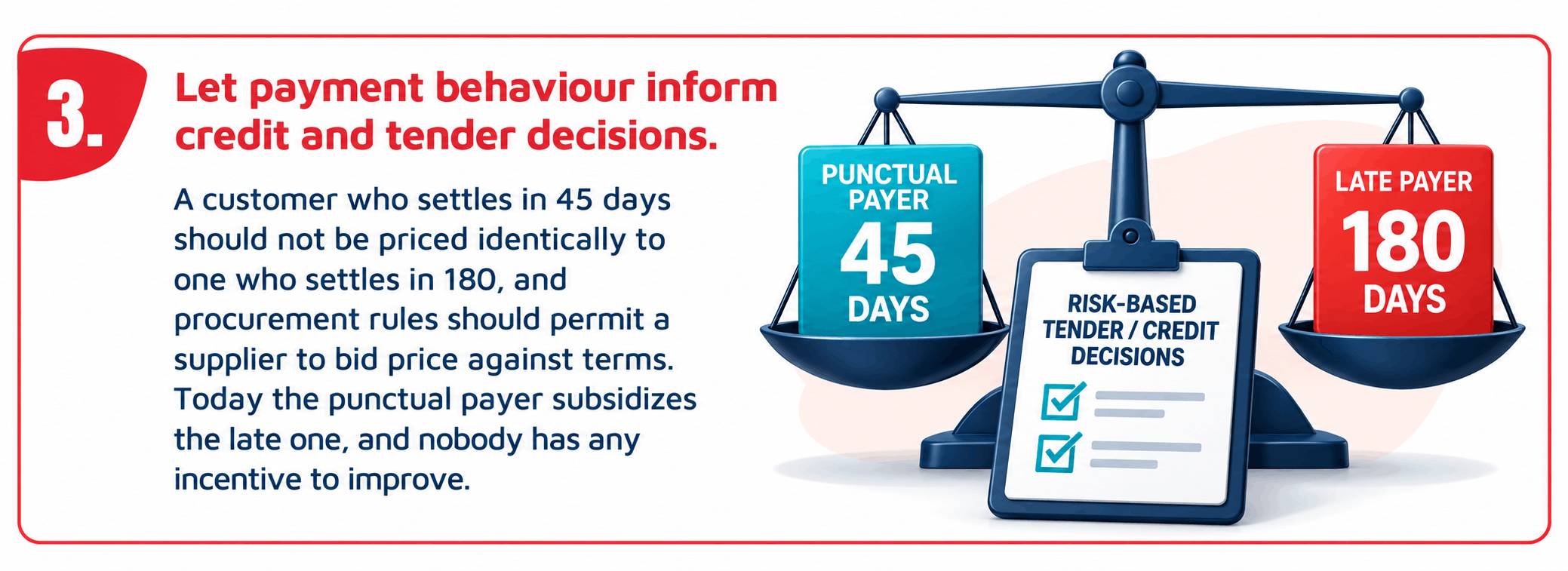
The industry should not present every receivable as somebody else's failure.
Distributors must assess credit properly, enforce approved terms, segment institutional customers by risk, monitor ageing daily and set limits that actually hold.
A distributor that keeps extending credit to a customer with visibly deteriorating payment behaviour is not demonstrating commitment to healthcare.
It is accumulating risk and eventually transmitting it to a patient. Credit should be a commercial decision supported by data. It should not be a relationship decision made because a customer is important. That discipline applies to us as much as to anyone in this market.

WHAT WE CARRY
Samospharma experiences the working-capital impact of delayed institutional payments directly. We have tightened our credit discipline and revised our payment terms in August 2026 to compress The cash-conversion cycle.
But internal discipline cannot solve a structural sector-wide problem. We can manage our own exposure; we cannot eliminate the payment risk transferred through the wider healthcare supply chain.
Our discipline protects our balance sheet. Predictable sector-wide payment protects the medicine supply chain.
Ghana's Health Supply Chain Master Plan 2025s sets a national framework for improving health commodity supply chain performance. That conversation should include working capital, because the pharma supply chain does not run on purchase orders. It runs on cash.
When the payment cycle is predictable, distributors replenish confidently,
importers commit foreign currency, warehouses carry appropriate safety
stock and hospitals order against a functioning system.
When it becomes unpredictable, every participant starts protecting itself.
The hospital delays. The distributor tightens credit. The bank becomes
cautious. The international supplier shortens terms. Inventory falls.
Somebody eventually calls the result a medicine shortage. It may have
started months earlier with an unpaid invoice.
DISCLOSURE
Samospharma Limited operates in pharmaceutical distribution and is a creditor to institutions of the kind described here.
So it benefits directly from predictable payment cycles. The argument is offered as a sector-wide supply chain proposition rather than a request for preferential treatment, and the arithmetic above is reproducible from published Bank of Ghanaian rates.


